
Paint booth design is crucial for quality finishes, safety, and regulatory adherence. Proper planning, utilizing resources like detailed paint booth design pdf guides, ensures optimal performance.
Importance of Proper Paint Booth Design
Proper paint booth design is paramount for achieving consistently high-quality finishes, minimizing material waste, and ensuring a safe working environment. A well-designed booth, detailed in resources like a comprehensive paint booth design pdf, directly impacts paint adhesion, gloss, and overall durability.
Furthermore, adherence to regulatory standards – as of May 4th, 2026 – is non-negotiable. Incorrect design can lead to costly fines and operational shutdowns. Effective ventilation, detailed in design documentation, removes hazardous fumes and maintains air quality. Safety features, like fire suppression and explosion relief, are integral to worker protection. Ultimately, a thoughtfully designed paint booth boosts productivity and reduces long-term operational costs.
Regulatory Standards and Compliance (as of 05/04/2026)
As of May 4th, 2026, paint booth construction and operation are governed by stringent regulations prioritizing safety and environmental protection. A detailed paint booth design pdf should explicitly address these requirements. Steel gauge must meet or exceed No. 2 minimum standards, and booth area limitations are capped at 150 sq. ft.
Compliance necessitates proper ventilation systems, effective filtration (pre-, main, and carbon filters), and explosion-proof lighting. Fire suppression systems and explosion relief panels are mandatory safety components. Grounding and bonding are crucial for preventing static discharge. Thorough documentation, referencing current standards, is essential for inspections and ensuring ongoing operational legality.
Paint Booth Types
Paint booth design pdf resources detail three primary types: downdraft, crossdraft, and sidewall exhaust, each offering unique airflow characteristics for varied applications.
Downdraft Paint Booths
Downdraft paint booths, as detailed in comprehensive paint booth design pdf documentation, are renowned for their superior capture of overspray. Air is drawn downwards, perpendicular to the painted surface, effectively pulling particles away from the operator’s breathing zone. This design minimizes airborne contaminants and enhances visibility during the painting process.
These booths typically feature grated floors with pit collection systems, requiring regular cleaning to maintain efficiency. The downward airflow also contributes to a more uniform finish, reducing imperfections. Paint booth design pdf guides emphasize proper airflow velocity and filter selection for optimal performance in downdraft systems, ensuring compliance with safety regulations and maximizing paint utilization.
Crossdraft Paint Booths
Crossdraft paint booths, thoroughly explained within detailed paint booth design pdf resources, utilize airflow moving horizontally across the object being painted. Air enters from one side of the booth and exits through filters on the opposite side, carrying overspray away from the painter. This configuration is often favored for larger parts or when access to the object during painting is required.
Paint booth design pdf guides highlight the importance of proper air velocity and filter maintenance in crossdraft systems to ensure effective contaminant removal. These booths generally require less floor space than downdraft models but may necessitate careful consideration of airflow patterns to prevent overspray from reaching the operator’s breathing zone, prioritizing worker safety and finish quality.
Sidewall Exhaust Paint Booths
Sidewall exhaust paint booths, comprehensively detailed in paint booth design pdf documentation, feature exhaust ports along the sides of the booth, creating a sweeping airflow pattern. These systems are often employed when painting large, bulky items where downdraft or crossdraft configurations are impractical. Air is drawn in through intake filters, flows around the object, and is exhausted through the sidewall filters, effectively capturing overspray.
Paint booth design pdf resources emphasize the need for strategically placed exhaust ports and proper air balancing to maintain consistent airflow and prevent turbulence. Sidewall booths can be more economical to construct than other types, but require careful planning to ensure adequate ventilation and worker protection from paint fumes and particles, guaranteeing a safe and efficient painting environment.
Ventilation System Design
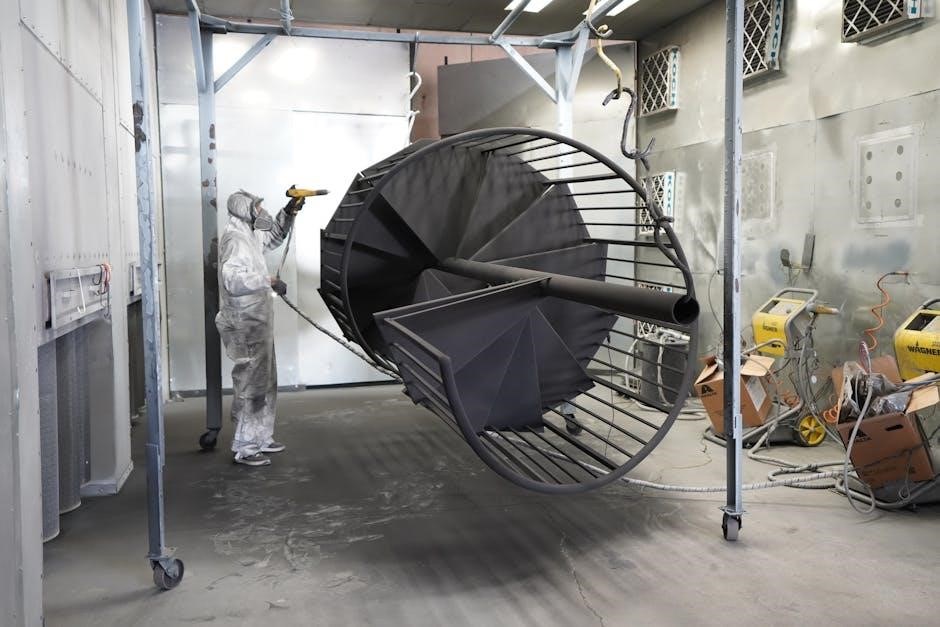
Ventilation, as outlined in a paint booth design pdf, is paramount for removing fumes and maintaining air quality. Effective airflow ensures a safe workspace.
Airflow Principles in Paint Booths
Airflow within a paint booth, detailed in comprehensive paint booth design pdf documentation, is fundamentally about controlling contaminants. Effective systems prevent overspray from escaping into the facility and ensure a safe breathing environment for operators. The core principle revolves around creating a laminar flow – air moving in a single direction – to carry away paint particles.
This directional flow is achieved through a combination of intake and exhaust systems. Understanding airflow patterns is vital for optimizing filter performance and minimizing paint waste. Proper design considers booth geometry, filter placement, and fan capacity to establish consistent and predictable airflow. A well-designed system minimizes turbulence, preventing paint buildup and ensuring even coating application. Referencing a detailed paint booth design pdf will illustrate these principles visually.
Fan Selection and Capacity
Fan selection, thoroughly addressed in a detailed paint booth design pdf, is paramount for effective ventilation. Capacity must align with booth size, airflow requirements, and ductwork resistance. Centrifugal fans are commonly used due to their ability to handle high static pressure. Calculating the required Cubic Feet per Minute (CFM) is crucial, considering factors like booth dimensions and paint type.
The paint booth design pdf will outline methods for determining CFM, often based on air changes per hour. Selecting the correct fan motor horsepower ensures sufficient airflow without excessive energy consumption. Proper fan placement minimizes turbulence and maximizes efficiency. Regularly consulting a paint booth design pdf during the selection process guarantees optimal performance and compliance with safety standards.
Ductwork Design and Materials
Ductwork design, comprehensively covered in a paint booth design pdf, significantly impacts system efficiency. Smooth, gradual bends minimize airflow resistance, while properly sized ducts maintain optimal velocity. Galvanized steel is a common material choice due to its durability and corrosion resistance, as detailed within the paint booth design pdf guidelines.
Sealed ductwork prevents paint overspray from entering the ventilation system, ensuring clean exhaust. The paint booth design pdf will specify appropriate duct gauges based on pressure requirements and span lengths. Proper insulation reduces heat loss and condensation. Careful planning, referencing a paint booth design pdf, is essential for a safe and effective ventilation system, minimizing fire hazards and maximizing performance.
Filtration Systems
Filtration systems, detailed in a paint booth design pdf, are vital for removing contaminants. Multi-stage filtration—pre, main, and carbon—ensures clean air exhaust.
Pre-Filters: Removing Large Particles
Pre-filters, as outlined in a comprehensive paint booth design pdf, represent the initial stage of air purification within the booth’s ventilation system. Their primary function is to capture and remove substantial airborne particles – dust, debris, and larger paint droplets – before they reach the more sensitive and costly main filters.
These filters significantly extend the lifespan of subsequent filtration layers, reducing maintenance frequency and overall operational expenses. Typically constructed from disposable, low-cost materials like fiberglass or synthetic fibers, pre-filters are easily replaceable when saturated. Regular inspection and timely replacement are crucial for maintaining optimal airflow and filtration efficiency. A clogged pre-filter restricts airflow, diminishing the booth’s performance and potentially impacting paint quality.
Main Filters: Arresting Paint Overspray
Main filters, detailed within a thorough paint booth design pdf, are the core component in capturing the fine paint overspray generated during the spraying process. These filters, typically pleated media filters, boast a significantly higher efficiency rating than pre-filters, effectively trapping microscopic paint particles to maintain air quality and prevent environmental contamination.
The selection of appropriate main filter media – ranging from synthetic to fiberglass – depends on the type of paint used and the desired level of filtration. Regular monitoring of pressure drop across the filter is essential; a substantial increase indicates saturation and the need for replacement. Maintaining clean main filters is paramount for achieving a flawless finish and adhering to environmental regulations.
Carbon Filters: Odor Control
Carbon filters, as outlined in a comprehensive paint booth design pdf, are vital for mitigating unpleasant odors and volatile organic compounds (VOCs) released during painting operations. Activated carbon, possessing a vast surface area, effectively adsorbs these gaseous pollutants, ensuring a healthier and more compliant work environment. These filters are typically installed downstream of the main filtration stage.
The lifespan of carbon filters is contingent upon the volume of VOCs processed and the type of paint utilized. Regular replacement, guided by manufacturer recommendations and monitoring, is crucial for sustained odor control. Proper disposal of saturated carbon filters is also essential, adhering to local environmental regulations to prevent secondary pollution.

Lighting Considerations
Lighting, detailed in a paint booth design pdf, must provide adequate illumination for flawless finishes and safety. Color Rendering Index (CRI) is paramount for accurate color matching.
Color Rendering Index (CRI) Requirements
CRI, as outlined in a comprehensive paint booth design pdf, is a critical factor influencing the accuracy of color perception during the painting process. A higher CRI value indicates a light source’s ability to faithfully reproduce colors, mirroring how they appear under natural daylight. For professional paint applications, a CRI of 90 or higher is generally recommended.
Lower CRI values can lead to misjudgment of color shades, resulting in inconsistencies and rework. Selecting lighting with appropriate CRI ensures accurate color matching, minimizing defects and enhancing the overall quality of the painted surface. This is especially vital for automotive and industrial applications where precise color replication is essential. Detailed specifications regarding CRI are often found within detailed paint booth design pdf documentation.
Light Intensity and Distribution
Optimal light intensity and even distribution are paramount within a paint booth, as detailed in a thorough paint booth design pdf. Insufficient lighting can lead to imperfections being overlooked, while uneven distribution creates shadows that distort color perception. Generally, a minimum illumination level of 500-1000 lux is recommended across the entire work surface.
The paint booth design pdf should specify fixture placement to eliminate shadows and ensure consistent light coverage. Utilizing multiple fixtures, strategically positioned, is crucial. Proper distribution minimizes eye strain for painters and facilitates accurate assessment of paint application. Consideration should be given to the type of paint being used, as some finishes require higher light levels for optimal inspection.
Explosion-Proof Lighting
Given the presence of flammable materials, explosion-proof lighting is a non-negotiable safety feature, thoroughly addressed in any comprehensive paint booth design pdf. Standard lighting fixtures pose a significant ignition risk within a paint booth environment. Explosion-proof fixtures are specifically engineered to contain any internal sparks or thermal energy, preventing ignition of surrounding vapors.
The paint booth design pdf must detail the appropriate Class and Division ratings for lighting fixtures, based on the specific hazards present. These ratings ensure the fixture can withstand the potential for explosive atmospheres. Regular inspection and maintenance of explosion-proof lighting are critical to maintaining booth safety and adhering to regulatory standards.

Safety Features
A detailed paint booth design pdf prioritizes safety through fire suppression, explosion relief, and grounding systems, ensuring a secure working environment for operators.
Fire Suppression Systems
Fire suppression systems are a non-negotiable component of any compliant paint booth, as detailed within a comprehensive paint booth design pdf. These systems are designed for rapid fire detection and automatic extinguishing, minimizing damage and protecting personnel. Commonly, these utilize either dry chemical or foam-based agents, strategically dispersed throughout the booth.
The selection of the appropriate system depends on the materials being sprayed and the booth’s overall design. Regular inspection and maintenance, as outlined in the paint booth design pdf guidelines, are critical to ensure operational readiness. Proper placement of nozzles and detectors is paramount for effective coverage, preventing fire spread and ensuring a swift response in emergency situations. Automated systems offer a significant safety advantage.
Explosion Relief Panels
Explosion relief panels are vital safety features, meticulously detailed within a thorough paint booth design pdf. These panels are engineered to vent pressure in the event of a deflagration, preventing catastrophic structural failure of the booth. They provide a designated release path for expanding gases, safeguarding personnel and minimizing damage to surrounding areas.
The paint booth design pdf will specify panel sizing and placement based on booth dimensions and the flammability of materials used. Correct installation is paramount; panels must be securely mounted yet designed to fail at a predetermined pressure. Regular inspection, as outlined in the paint booth design pdf, ensures panels remain unobstructed and functional, offering critical protection against potential explosions during the painting process.
Grounding and Bonding
Grounding and bonding are essential safety protocols, comprehensively addressed within a detailed paint booth design pdf. These procedures mitigate the risk of static electricity buildup, a potential ignition source for flammable vapors present during painting operations. The paint booth design pdf will outline specific requirements for connecting all metallic components – the booth itself, ductwork, and equipment – to a common ground.
Proper bonding ensures electrical continuity, preventing voltage differences that could create sparks. The paint booth design pdf emphasizes the use of appropriately sized grounding conductors and regular inspection to verify their integrity. Adhering to these guidelines, as detailed in the paint booth design pdf, is crucial for preventing fires and ensuring a safe working environment within the paint booth.
Paint Booth Materials and Construction (based on 23 August 2025 data)
Paint booth design pdf documents specify steel gauge (No. 2 minimum) and maximum booth size (150 sq. ft.) for robust, safe construction, per 23 August 2025 data.
Steel Gauge Requirements (No. 2 minimum)
According to data from August 23, 2025, and detailed within comprehensive paint booth design pdf resources, the minimum acceptable steel gauge for paint booth construction is No. 2. This specification isn’t arbitrary; it’s a critical safety and durability requirement. Utilizing thinner gauge steel compromises the booth’s structural integrity and its ability to contain potential hazards like fire or explosions.
The No. 2 gauge ensures sufficient resistance to impacts and provides a robust barrier against paint overspray and chemical exposure. Furthermore, it supports the proper functioning of explosion relief panels, a vital safety feature. Adhering to this standard, as outlined in relevant paint booth design pdf guides, is paramount for compliance and operator safety.
Booth Size Limitations (Maximum 150 sq. ft.)
As per data established on August 23, 2025, and thoroughly documented in detailed paint booth design pdf materials, a critical design constraint is the maximum allowable booth size of 150 square feet. This limitation isn’t merely a suggestion; it’s a safety regulation directly impacting ventilation effectiveness and fire suppression capabilities. Larger booths present increased risks due to the greater volume of flammable vapors and overspray.
Restricting the size ensures adequate airflow and containment, allowing the ventilation system to efficiently remove hazardous materials. Consulting a paint booth design pdf guide will clarify how this impacts layout and equipment selection, ensuring compliance and a safe working environment.
Floor Construction and Materials
Detailed paint booth design pdf resources emphasize the importance of robust floor construction. The floor must withstand constant exposure to chemicals, abrasives, and heavy equipment. Concrete is the standard material, requiring a smooth, non-porous surface to facilitate cleaning and prevent paint accumulation. Proper sealing is vital to prevent solvent penetration and potential ground contamination.
Furthermore, the floor should be sloped towards a collection sump for efficient removal of waste materials. Paint booth design pdf guides will outline specific concrete mix requirements and sealing procedures to ensure durability and compliance with safety regulations, creating a safe and functional workspace.
Paint.NET Software in Design Visualization (as of March 8, 2026)
Paint.NET, a free image editor, aids in visualizing paint booth design pdf concepts. Users can simulate layouts, color schemes, and contrast settings for optimal viewing.
Utilizing Paint.NET for Booth Layouts
Paint.NET proves invaluable for creating detailed paint booth design pdf representations. Its user-friendly interface allows designers to easily draft booth layouts, incorporating dimensions adhering to limitations – a maximum of 150 sq. ft., as per current standards. The software’s curve and spline tools facilitate precise shaping of booth interiors and access points.
Furthermore, designers can experiment with equipment placement, ensuring efficient airflow and accessibility for maintenance. Utilizing layers within Paint.NET enables iterative design adjustments without compromising the base layout. This visual approach, derived from paint booth design pdf principles, streamlines the planning process and minimizes potential errors before physical construction begins, ultimately saving time and resources.

Color Scheme Simulation with Paint.NET
Paint.NET excels at simulating color schemes within a paint booth design pdf visualization. Accurate color representation is vital, demanding a high Color Rendering Index (CRI). The software allows designers to apply various paint colors to booth walls and surfaces, assessing their impact on perceived finish quality.
Crucially, Paint.NET’s theme customization features – particularly contrast settings – are beneficial. Designers can adjust the interface to mimic the booth’s lighting conditions, ensuring optimal viewing during paint application. This prevents visual fatigue and aids in accurate color matching. Experimenting with different color combinations before implementation, guided by paint booth design pdf best practices, minimizes costly rework and ensures a professional result.
Theme Customization for Optimal Viewing (Contrast settings)
Paint.NET’s theme customization, specifically contrast settings, is paramount for accurate paint booth design pdf visualization. Booth environments often have unique lighting, impacting color perception. Adjusting Paint.NET’s theme to replicate these conditions ensures realistic simulations. The software doesn’t always handle theme colors perfectly, necessitating user-defined contrast adjustments for comfortable viewing.
This customization prevents eye strain during prolonged design sessions and aids in precise color selection. Designers referencing a paint booth design pdf can accurately assess how colors will appear under the booth’s actual lighting. Optimizing contrast enhances detail visibility, crucial for evaluating surface finishes and identifying potential issues before physical construction begins.
Leave a Reply